Rolling slideshow will be back soon, meanwhile enjoy these Royalty Free historical fiction choices!

Deborah-Swift's Royalty Free 1 album on Photobucket

Friday, 23 November 2012

The Sins of the Father - by C.B. Hanley


In most medieval literature, nobody pays much attention to common people. For example, in his famed contemporary account of the Third Crusade, Ambroise devotes a whole passage waxing lyrical about the heroic deeds of three knights at the siege of Acre, and then casually dismisses the deaths of five thousand ordinary soldiers in two lines. Someone, he then tells us, has written a list of those who died at Acre:

A good clerk wrote an account of the many princes and counts who died there, and of all those who died in the host who were men of any note, without mentioning the middling and lesser individuals, whom he would never have managed to name if he had tried to include them all, for that would involve too much effort and writing.
(Ambroise, lines 5581-88, my translation).

Yes, it’s too much trouble even to list their names after they’ve died for a cause which was not of their making. Ambroise’s chronicle, along with most other literature of the twelfth and thirteenth centuries, was written for the “1%”, the knights and nobles who could afford to commission it and who had the leisure to listen to it. This audience was not interested in the deeds of common people, so they were conveniently written out.

To a lesser extent, this disregard for the ordinary person is also a feature of much historical literature. How many times have you read something along the lines of ‘he passed his cloak to the waiting squire’, or ‘she called her maid to arrange her hair’? These people don’t have names, only functions – they are ignored most of the time, brought into play when they are needed, and are then expected to drop back into obscurity. But what was it like to be that commoner, that squire, that maid? What were their lives like? What did they think and feel?

All this was at the back of my mind as I started writing The Sins of the Father, and it linked quite nicely with another issue I wanted to include. I read a lot of crime fiction, and I’ve always been struck by the fact that detective characters are predominantly people who are experienced, hard-boiled, been-there-seen-it-done-it types who aren’t afraid of anything. What would it be like to have a main character who wasn’t so experienced? Someone who was, quite frankly, just as scared as you or I might be in a similar situation?

And so Edwin Weaver was born. At the start of The Sins of the Father it’s May 1217, he’s nineteen years old and the son of the bailiff on one of the estates belonging to a powerful earl. He’s reasonably educated, which puts him a cut above the village labourers, but he’s a world away from the nobles in the castle, who live separate lives, speak a different language, and who are, to him, almost a different species. He’s just an ordinary man who is put into an extraordinary situation.

I don’t want to give away too much of the plot (because I’m hoping you might read the book!) but a murder is committed which could have huge, national ramifications, and Edwin ends up having to investigate it at the earl’s order. He’s got no choice – technically he’s his own man, but in practice the earl pretty much owns him and his family, and his livelihood and even his life might depend on the outcome. He’s catapulted into a noble world which he doesn’t understand, with the squires, page and lady’s maid his only companions.

What was important to me as I wrote was that the events of national importance (there is a civil war going on, after all) are only the backdrop to the story. Here it is the nobles who are the incidental characters: they are in the background while the narrative is told only from the point of view of what would normally be the ‘supporting cast’ – Edwin and his friends. I can certainly identify more with them than I can with the nobility, so I hope that readers feel this way too.


The book is available to buy at Amazon or direct from the publisher  

Find out more on Catherine's website www.catherinehanley.co.uk

Thursday, 15 November 2012

A House Near Luccoli by DM Denton


Picture

I love the stories in history that wait patiently to be lifted out of the shadows, offering room for the imagination to balance between the known and unknown; stories that are fresh and fascinating, about someone or something obscurely rooted in the past which, with attention and nourishment, might grow and blossom into enlightening entertainment for the present.

In 2002, while driving to work, I was fortunate to be near enough to the Canadian border to listen to CBC Radio 2, specifically a program called In the Shadows. The show highlighted the lives and works of artists—mainly musical—who for a variety of reasons had been largely ignored or forgotten. One morning a 17th Century Italian composer, whom I and obviously many others had never heard of, was featured. His music was stunning: fluid and melodic, with clear expressive vocals and distinct instrumentations. His story was replete with romance and intrigue, triumphs and tragedy, like an opera drawing on the divinity and failings of gods and men.

By the time I pulled into the parking lot at work, I knew why I was listening. I “knew” Alessandro Stradella. I recognized his distinct voice, his swaying form, his infectious smile, and his wandering heart. I had witnessed the rise and fall of his talents, how his music had showered him with forgiveness if not fortune. I spent the rest of that morning and many hours more in pursuit of him, my writer’s urge “to do something with him” easier stirred than accomplished. He was so little on the pages of Google searches and music histories; a desire to create something significant out of my interest in him was soon frustrated and abandoned.

It wasn’t until 2005 that I returned to Stradella as the novel subject I was looking for. The timing must have been right, for “suddenly” resources, although still not in abundance, were easier to find. As I read my costly used copy of Alessandro Stradella, the Man and his Music by musicologist Carolyn Gianturco, I found an opportunity for imagining my way into his story, focusing on his last fateful days in Genoa—not to change history but quietly humanize it, not merely to appreciate a great musician but personalize him, to reveal the ordinary in the extraordinary and the significance of the insignificant. Equipped with specifics and speculation, a growing CD library of his music, and a fictional female protagonist stepping out of my own hopes and disappointments, I was ready to begin.

A House Near Luccoli is a novel of chance encounters, beautiful music and the paradox of genius, focusing on one of the most legendary and undervalued figures of Italian Baroque music, Alessandro Stradella. Published by All Things That Matter Press. It is set in Genoa 1681-1682.

It was published at the end of August (2012) by All Things That Matter Press, a small publisher based in Maine.

My Website: http://www.dmdenton-author-artist.com/
My Blog: http://bardessdmdenton.wordpress.com/

BUY THE BOOK : Amazon  Barnes and Noble

Monday, 22 October 2012

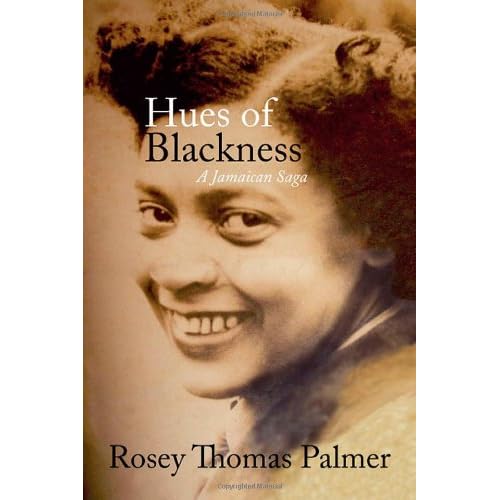
Hues of Blackness by Rosey Thomas Palmer


An awards celebration in a rural town square in Jamaica triggered my most extensive writing adventure. I had come to see Rev. Stanley Hewling, receive his parish award for he had supported me to escape a cramping day job by starting a preparatory school. However, my creativity remained unsatisfied. That outcome awaited a strongly composed octogenarian woman awardee.

Eva Jones was erect, medium hued, with crisp, white hair and challenging eyes. Her citation mentioned her involvements in social work, teaching and archive preservation but my fascination was piqued by the person rather than her recognised contributions. I was curious about her bright confidence at an age when many of her contemporaries had long since adopted infirmities and complacence.

Her proud carriage suggested military training and an undaunted spirit shone in her smile as she accepted her accolade. As one whose admiration the strength of Jamaican women had brought me to the island, I recognised that she typified their independence and their overcoming. I introduced myself to her and requested future contact. She nodded her head in the direction of the road junction we faced and said, “I live there, at 2 Murry Street.”

My first visits were tentative. My preparatory school was demanding but I grasped occasional, fleeting moments of her company. She was very reserved. Eventually she impulsively invited me to sit on her porch. Once there, we found many common interests in her library for our reading seemed to follow similar paths. Eva was far ahead of me on the journey, formerly a Rosicrucian student, she had developed as a theosophist and had a firm belief in reincarnation. She taught me about Lemuria and Atlantis and dwelt on the unity of all faiths as explored in Isis Unveiled by Helen Blavatsky. Her interest in promoting my thought was like the Amerindian guide’s in Mary Summer Rain’s series which she recommended to me.

My goal was to preserve her wisdom for myself and for future generations. To facilitate this I tried to persuade Eva to allow me to write her biography. She was extremely modest and careful of confidentiality. She kept saying, “No, too many of those involved may recognise the parts they played and I don’t want to embarrass anyone.”

Nevertheless, she let me write sample pieces of personal recollections. She demanded historical accuracy so she suggested, “We go out one Sunday morning, before any cars are around. We’ll walk the length of Great George Street and I’ll show you how Savanna-la-mar used to be.”

This was the turning point of our endeavours. I was a member of a group set up to explore sustainable tourism. It operated from parish to parish, and had just spread to Westmoreland. The organisation was called SCF at that time and executive members went to potential venues to find hosts and guides who could promote their locality in a saleable way. As we walked, savouring the town setting of Eva’s youth, I explained to her the prospect of community tourism.

The next time I submitted a childhood story for Eva’s conscientious scrutiny, she looked up sharply and said, “Alright, tell my story, but you must fictionalise it and scramble it through history.”

An intense year of writing and research followed. Eva joined the community tourism organisation on many of its trips and we theorised about history and myth as lived experiences in the hills, valleys and plains of Westmoreland. When she did not come herself, I reported trips back to her and used the settings for stories in which heroines ranged from Taino days to the current times in Jamaica’s history. There was no apparent link between each part of the narrative except the indomitable spirit I had found in Eva Jones. At the end of the year I left Jamaica for a four month stint in England during which I needed to finish the book and find a publisher.

However, in real life events disrupts intentions. My line of inquiry for publication proved mis-thrown. My time to write was invaded by the need to earn. My plan to return home was delayed by unexpected political decisions and family break down. Hues of Blackness lay unattended to.

Yet adversity brings out the fighting spirit. I was summoned to appear in court to defend my right to the marital home and my daughters’ recognition as joint tenants in fee simple. The tempestuous setting of Jamaica did the rest. Rescued from a waterlogged former school room by my friend Eva and marooned at her home whilst return flights were suspended due to a hurricane, I wrote the narrative that turned our historical episodes into a novel. I worked at night while Eva slept and we shared and evaluated the results each day. I flew home with a completed manuscript. Internet searches resulted in a joint venture agreement with Strategic Books and I was able to make another trip to see Eva before I signed a contract.

By now Eva was well over ninety. Her capacity to walk was failing and more of the sorrows of life had taken their toll. She felt she was nearing the end. She listened to what I had to say then she said, “Publish it, all of it.”

 “All of it?” I queried, surprised.

“Yes, all of it, including the biographical bits,” Eva affirmed.

I was awed and relieved. During that trip she signed a release letter for the anecdotal information she had shared and she gave me two photographs. My book cover shows Eva, in the 1950s, provocatively locking the gaze of the browser. I also have one of her in her eighties, looking proudly down from the heights of her mango tree, which she climbed, machete in hand, to tend a limb. If she is right and we are reincarnated, you may meet her one day. If she was wrong you have not missed your chance of knowing this indomitable woman. Between the pages of Hues of Blackness: A Jamaican Saga you will meet her spirit.

Find out more on Rosey's Blog http://roseythomaspalmerauthor.wordpress.com

Friday, 12 October 2012

The White Rajah by Tom Williams


Many, many years ago – decades, in fact – I found myself spending a few days on a holiday in Sarawak. We had signed up with a company that took you up river from Kuching, then a really small town, to visit the famous longhouses. Here we met the indigenous Dyak people who, not that long ago, had been headhunters and many of whom still lived on the most basic slash and burn cultivation and the food they could catch in the jungle. We even caught a tiny mouse deer ourselves and contributed it to the collective pot. It was a magical few days and almost certainly unrepeatable, for the last couple of decades have seen logging destroy much of the habitat the Dyaks rely on to live, while mass tourism means that trips like those we made then are probably by now impossible.

It was on that trip that I first came across James Brooke. The museum in Kuching had an exhibition of Sarawak's history with a large display on 'The White Rajahs' next to a much smaller display on 'The Colonial Era'. I was confused. The White Rajahs were clearly, well, white. Why was it that while the tone of 'The Colonial Era' was rather disapproving (it mainly seems to have consisted of killing the Governor), 'The White Rajahs' display hinted at a Golden Age?

The answer seems to have been the extraordinary relationship the first White Rajah, James Brooke, had with the people of Sarawak. Sarawak then was a province of a much bigger country ruled by Muda Hassim in Brunei. Hassim gave the rule of Sarawak to James Brooke as a reward for Brooke's help suppressing a rebellion there. Brooke insisted that Sarawak was not part of the British Empire and he set out to rule as an enlightened despot.

At the centre of the exhibition was a portrait of James Brooke. It was a copy of the one in London's National Portrait Gallery, which I've used for the book cover. I saw it and just wanted to know more about this astonishingly handsome, dashing man who had taken a tiny country halfway round the globe from his home and made it his own. When I got back to England I started to read all I could find about him. It wasn't that difficult. His diaries were published, as were those of Keppel, the admiral who helps him defeat the pirates. I found myself getting more and more caught up in his story and, because I had always wanted to write, I decided to turn it into a novel. What I aimed for was an old-fashioned yarn with an old-fashioned hero and, up to a point, I succeeded. But in the end, although it got representation by a well-known agent, it really wasn't good enough for publication. I put it away and forgot about it.

Years passed and I found myself writing lots of non-fiction, often anonymously. I decided that I owed it to myself to write the novel I've always planned for. We were moving into an age when Western armies were invading remote countries, often with noble intentions but sometimes with terrible consequences. I wanted to write about how good people could end up involved in questionable wars and horrifying massacres. I remembered that James Brooke had himself been involved in a massacre which, at the time, had horrified liberal opinion in Britain and resulted in a Commission of Inquiry in Singapore. I decided to go back to my original novel and rewrite it as a much darker piece with a flawed hero.

I wanted to get close to Brooke as a man, rather than just as a historical figure, and I thought this could best be done through the eyes of someone who knew him and shared his experiences. I tried to think who this could be and came to the idea that the story could be told from the point of view of a sailor on his ship, the Royalist. And that was how John Williamson came into being. Unlike Brooke, who is very closely based on the historical figure, Williamson is almost entirely fictional. The real James Brooke had an interpreter called John Williamson and I just borrowed the name. (The real Williamson was half-Malay and died quite early on.)

Once Williamson came into the story, his role just grew. He had started out as a narrative device but, as time went by, he became central to the story. Partly, I think, this is because everything was seen through his eyes and so I found myself thinking more and more about how he felt about things and partly because I tried to use Williamson as a figure who reflected Brooke's relationship with the Dyaks. So Brooke 'educates' him but at the same time Williamson finds that the relationship stops him developing fully as his own man. By now, what had started as a historical novel with a bit of romance became much more a romance set in a historical story.

The whole 'gay' bit never seemed that important. The real Brooke was almost certainly gay, all the characters around him were men: if he was going to have a relationship, it was always going to be a gay relationship.

The book was agented and shown to four major publishers all of whom rejected it, saying it was too "difficult" for a first novel. I was left with the definite impression that if Brooke had a female lover, it would have made the book massively easier to sell. I'm not saying that the homosexuality was a deal-breaker and that it would have been sold otherwise, but I am pretty certain it was a definite problem as far as marketing went. So I sent it to an independent publisher who does a lot of gay books (JMS Books) and it was accepted straight away.

Tuesday, 9 October 2012

Legionary - Viper of the North by Gordon Doherty


Rome was eternal and her legions invincible. Then the world changed.
The Huns rode from the east, spilling from the windswept steppes and into Eastern Europe. The tribes that first felt their wrath were ill-prepared for their mastery of mounted warfare, and found that they had two choices; to submit to the Hunnic yoke, or to run for their lives. The mighty Goths, a raft of Germanic tribes that had warred amongst one another and with Rome for hundreds of years, were the last of these tribes between the Huns’ advance and the Eastern Roman Empire. But when the Huns arrived, the Goths were forged together in the fires of adversity and they made their choice – they ran from the Huns and flooded across the Danube and into the empire. Hundreds of thousands of them. Warriors, elderly, children.
The Goths arrived in the province of Moesia Inferior, panicked but respecting the tentative truce that had been brokered with the empire.  They were initially kept in a vast refugee camp on the southern banks of the Danube. Despite this fragile peace, the border legions were threadbare and ill-equipped to police such an incursion.
It was this that sparked my imagination.  Such a huge number of people – proud and noble – terrified, angry and lost in a foreign land. And the Romans, so few, doubtless anxious at the Goths’ arrival and fearful that the Huns would surely follow. This seething cauldron of emotion and strife was always balanced on a knife-edge. Then, I had the killer thought – the thought that inspired the tale of ‘Legionary: Viper of the North’:
What if one dark individual had engineered all of this, and now readied to tip that balance?
Buy links:


Monday, 1 October 2012

Finn's Fate by Michael Wills


On 4th March 2010 I broke my arm while climbing a tree. A silly thing to do and I paid for it by not being able to enjoy the pursuits which are important to me, for a very long time. Because of the severity of the fracture, I was enrolled for a period of full time physiotherapy rehabilitation at Salisbury Hospital.

When the time came for me to be discharged my physiotherapist said, “You will never get the full use of your hand back, you have mild Depuytrens.”
“What’s that,” I asked.
“Nothing really to worry about, roughly 20% of men over sixty get it. Small growths appear on the connective tissue in the palm. At its worse it can cause your fingers to be permanently bent. Tradition has it that it was brought to England by the Vikings who spread it throughout northern Europe. In fact it is known as the “Viking Disease”. So you must have Viking ancestry!”

Now, my family has lived and bred on the Isle of Wight for hundreds of years, in fact in a long and time consuming burst of enthusiasm I once traced my family tree right back to the 16th century and with few exceptions all of my forefathers lived on the Island.  Is it possible that we have Island links back as far back as the tenth century, and is that when I got my Viking blood? An interesting thought but impossible to prove. What were the Viking connections with the Isle of Wight I wondered?
By coincidence, my interest in finding out about the Viking raids on the south coast was further stimulated by an article in the Times on 12th March 2010, entitled, “Mass grave in Dorset contains remains of executed Viking warriors”.

http://www.timesonline.co.uk/tol/news/uk/article7058921.ece
I love mysteries, but being of a very tidy disposition I like to have them solved. I knew the area in which these skeletons were found very well and it was obvious to me that the victims must have been on their way to or from Dorchester. They must have been ambushed by superior forces. But how? And how was it that at least one of their number came from north of the Arctic Circle?

The mystery had to be solved and this, together with my fascination about the Viking presence on the Isle of Wight, started me off on a journey of research and discovery which led me to the Arctic and on board my boat, through storms and calms to retrace the voyages of the Viking ships.
It was a story I had to tell, I hope that you enjoy it.


Click on the Bookcover to buy.

Monday, 17 September 2012

Barbados Bound by Linda Collison


Barbados Bound

It all started with a ship. On April 14,1999, I saw in the newspaper a startlingly anachronistic colour photograph of a three-masted wooden ship under sail. It looked like it had just sailed out ofthe eighteenth century. Below it, an intriguing advertisement:

Help wanted: Deckhands to man floating museum…a once-in-a-lifetime opportunity to sail as crew on Endeavour, the replica of Capt.James Cook’s ship that will visit Hawaii in November. Crewmembers sleep in hammocks slung together on the lower deck. They must be prepared to go aloftand work the sails at any time of day in any weather, not suffer from chronicseasickness or fear of heights, and be physically fit. Sailing experience is not essential…

     Six months later my husband and I were at the dock in Vancouver, signing ship's articles.
     We are sailors, my husband Bob and I. We have a sailboat of our own and quite a few nautical miles under our belts, but we knew essentially nothing about sailing an 18th century,three-masted tallship.  
     The crew promised to teach the recruits everything we needed to know, and so we leaped at the opportunity. It sounded like a great adventure, and indeed it was. In fact, it changed my life and gave me a new passion: Maritime history. I actually went back to college to study history, having majored in Nursing, the first time around.

     Bob and I spent three weeks aboard the Endeavour, as part of the foremast watch, crossing the Northern Pacific Ocean. We learned the names and functions of the hundreds of lines, sails and spars that power the ship; we learned to climb aloft on the ratlines, stepping out on the foot ropes under the yards to make and furl sail. We took turns steering the ship and were responsible for cleaning and maintaining her in eighteenth-century fashion. We slept in hammocks we strung from the deckhead every evening. The voyage crew,as we green-but-willing sailors were called, bonded quickly, for we were all init together and we all felt the same swing of emotions -- anxiety, fear,fatigue, exhaustion, sea-sickness, hunger, occasionally resentment – but most of all, exhilaration and awe. For me, those weeks on the Endeavour were nothing short of a time machine.

     When Bob and I disembarked in Kona, Hawaii, I carried with me the seeds for a novel. It would not be about Captain Cook or his extraordinary voyages, but it would begin in the mid-eighteenth century, aboard a vessel quite like the one I had sailed on. I wanted to explore what it might have been like to have been a woman aboard a ship; not a passive passenger but a woman who takes an active part, who is part of the crew. My research proved there were many women aboard ships in the age of sail.  At least thirty and quite likey more, who dressed and worked as men.Their stories, when told, have typically been romanticized and somewhat discredited. I wanted to bring out the gritty reality. Working aboard the Endeavour helped me experience that. My experience as a registered nurse, specializing in Emergency and Critical Care, also came into play.

     My first historical novel was five years in the researching and writing. It wasoriginally published as Star-Crossed by Knopf/Random House, and chosenby the New York Public Library to be among the Books for the Teen Age --2007. Yet I hadn't really written it for teens, but from a teenaged girl's perspective.  
     I was so caught up with the characters and the historical background that I wrote a sequel, Surgeon's Mate, which Knopf turned down. They weren't interested in a series. But Fireship Press was. PublisherTom Grundner offered me a contract for Surgeon's Mate, and offered to publish Star-Crossed under a different title as soon as he could acquire it. As soon as Star-Crossed was out of print I obtained a reversion of rights, rewrote the manuscript and signed a contract with Fireship Press.  Barbados Bound was published in July, 2012.   The story is essentially the same as Star-Crossed, but I was able to correct a few anachronisms, introduce a minor characterwho appears in the sequel -- and add back a little salty language taken out of the first edition.  At last both books are under the same publisher, or aboard the same ship:  Fireship Press.

     It all started with a ship and an adventure -- and the adventure continues.  Bob and I just returned from a four-day sail on Topaz, our 36-foot sloop.  Sailing inspires me because the sea is aforce to be reckoned with. The sea connects us, it covers most of the earth, it is a portal to the past. It provides a rich backdrop for a novel because of its power and its historical importance. The sea offeres both freedom and imprisonment, it nurtures and destroys.  I both love the sea and fear it, and I hope that conflict is apparent in my novels.  Conflict, external and internal, is what drives my writing.

Linda Collison